To the Editor:
Referring to James Russell Lowell's importnce to her, Sandra M. Gilbert wrote in the 1996 Presidential Address (112[1977]:370-79) that "unless I am doing a grave injustice to one of the 103 colleagues who held this office between his tenure and mine, I believe I am the first poet to preside over the MLA since he did" (372). In MLA history, Houston A. Baker, Jr. stands between Lowell and Gilbert. Baker, who has published three books of poetry, was included in my anthology Trouble the Water: 250 Years of African American Poetry (1997) because he is one of our most accomplished poet-critics. Gilbert's claim in not necessarily a grave injustice but an oversight to be corrected.
Jerry W. Ward, Jr.
Tougaloo College
Thursday, September 12, 2013

Alice Walker
Thursday, September 12, 2013
Alice Walker, Autobiographical Contract, and Sciences of Memory
[By Jerry Ward, Jr.]


Definition is essential.
What does womanist mean and what is its relation to feminist? Does the
assertion that womanist is to feminist as purple is to lavender explain
saturation as a major difference in historical experience? The various essays,
bits of interviews, poetry (inside prose frames) and reviews collected in Alice
Walker’s In Search of Our Mother’s Gardens (1983) suggest an answer. They
suggest that Walker the novelist is of a “revolutionary” mind like a furious
flower, is as serious as was Zora Neale Hurston, Audre Lorde, and Toni Cade
Bambara. These women assumed the freedom to create is an entitlement of nature
not of man. And they have the backing of words attributed to Sojourner Truth in
1851: “Whar did your Christ come from? From God and a woman! Man had nothin’ to
do wid Him.”
Walker’s
attitude toward literature has a faint echo of Langston Hughes’s “The Negro
Artist and the Racial Mountain.” Do not confuse attitude with heritage.
Mountains are gendered property, and in Walker’s case, Sojourner Truth holds the
mortgage! Interpretation can take the guise of paying interest, escrow, and
principle.
And Rose asked in the same paragraph: Or are we doomed to live always in the divided worlds of subjectivity and objectivity, with no translation possible between these languages? (7)
Walker’s recent thinking about her autobiographical contract appears in the appended reader’s guide for Now Is the Time to Open Your Heart (2004). Asked what inspired her to write the novel, Walker replied: “So in Now Is the Time to Open Your Heart I set out to chart such a journey, the adventures of Kate Nelson Talkingtree, who is named partly for a grandmother, my father’s mother, who was murdered when he was a boy.” This novel incorporates Walker’s quest for the culture of the Grandmother, her keeping the faith with the autobiographical contract. Through fiction, Walker provisionally confirms Steven Rose’s idea that sciences of the collective -- “ecology and ethnology, sociology and economics” (7-8) -- are better instruments than the sciences of “individual psychology or neuroscience” (7) for exploring the nature of memory. The jury is still out, however, on any permanent conjoining of subjectivity and objectivity, inside or outside of fictions.
Walker’s
trope of the garden has a great deal to do with memory and with the fact that
canonized writers have no monopoly in cultivating ART. Context requires
remembering that Walker first broadcast ideas about mothers and gardens at the
1973 Phillis Wheatley Festival in Jackson, Mississippi and remembering I had
taught The Third Life of Grange Copeland the previous year. My memory of
that event and of my teaching has been reactivated by how the biologist Steven
Rose commented on the Rosetta Stone in The Making of Memory
(1992):
Memory
pervades ancient ballads and modern novels alike. Especially in the present
century, from James Joyce and Marcel Proust to the new writing of Margaret
Atwood, of J. G. Ballard, Toni Morrison, Salman Rushdie and Alice Walker, the
theme of personal memory, of the constant examination, interpretation, and
reinterpretation of lived experience, is central.
And Rose asked in the same paragraph: Or are we doomed to live always in the divided worlds of subjectivity and objectivity, with no translation possible between these languages? (7)
Mother transmits the seed of art and the desire to grow
it into ART to daughter. We are expected
to read the fine print in the title essay “In Search of Our Mother’s Gardens” as
Walker’s autobiographical contract.
Walker’s recent thinking about her autobiographical contract appears in the appended reader’s guide for Now Is the Time to Open Your Heart (2004). Asked what inspired her to write the novel, Walker replied: “So in Now Is the Time to Open Your Heart I set out to chart such a journey, the adventures of Kate Nelson Talkingtree, who is named partly for a grandmother, my father’s mother, who was murdered when he was a boy.” This novel incorporates Walker’s quest for the culture of the Grandmother, her keeping the faith with the autobiographical contract. Through fiction, Walker provisionally confirms Steven Rose’s idea that sciences of the collective -- “ecology and ethnology, sociology and economics” (7-8) -- are better instruments than the sciences of “individual psychology or neuroscience” (7) for exploring the nature of memory. The jury is still out, however, on any permanent conjoining of subjectivity and objectivity, inside or outside of fictions.
Wednesday, September 11, 2013
Jonathan Kline's first novel
Blurb for Wisdom of Ashes
Jonathan Kline’s Wisdom of Ashes is lagniappe for readers
who know New Orleans intimately and for those who hunger for the carnivalesque
secrets of the city. The novel echoes the realism of Honoré de Balzac, Mark
Twain, and Flannery O’Connor; its texture is blessed by Saint Dymphna. Kline
portrays his visions of the city’s time, characters, climates, and rhythms with
remarkable distinction.
Jerry W. Ward, Jr., author of THE KATRINA PAPERS: A Journal of Trauma and
Recovery
Friday, September 6, 2013
17 Passages
17 Passages for 17
Poets
Language as form
flips flounders flaps
the fire is time
)1
God’s death
was not suicide.
It was the result
of a moral position
incompatible with life. (2
Deception:
a kerosene lamp
in the heart of darkness. )3
Your lips
purple the world. (4
Language
burns
blasts
burnishes.
Music
blooms.
) 5
When she extends
an invitation,
read her hips. (6
Colorblind candy,
you so dandy.
You so randy,
you so raunchy,
you can’t amos
or do the andy. )7
Refuse to hope
unless uncertainty
invents a virus
to murder hate. (8
17 Passages for 17 Poets, page 2.
Darkness of darkness
So logical it shines
Water enters before a man enters water,
Rides an ark of bones in a space which never heard of
time )9
Native son
did the right thing
In Fort Greene Park
by the soul of a prison ship
martyrs monument.
He wrote the book.(10
After hanging,
Through razoring rain,
Searing sun,
Whipping wind,
Scouring snow
You
shall be
Lean,
beautifully angeled,
Superbly
fit
To
wear designer clothes. ) 11
Your voice
Made the air
Bleed. (12
Shakespeare,
Paragon of plagiarists,
When imagination fails,
Old felon, fly down
From heavenly hell,
Bringing a mercy
Of rain dry as dust,
A cold awakening
For a brain’s slumber.
(13
A crane posed on the lawn for a photograph.
A lion growled at the door for milk.
I shall be surprised to not be at home. )14
17 Passages for 17
Poets, page 3
I need a sign
That you were there
The morning I walked
Out of your life
Into your soul. )15
You know what it means to be New Orleans/ when the
trumpet takes a bath in Afro-Sheen (16
Then you pick up your life
After celebrating, barely recollecting
Where you left it, stuff it in
Whatever garments
come to hand, and violently
Hit the streets.
It’s your resurrection after all. )17
Wednesday, September 4, 2013
Note for Richard Wright's 105th Birthday
Note for Richard Wright’s 105th Birthday
In
1942, the psychologist Fredrick Wertham sent Richard Wright two verses, one on
January 15 and the other on May 27. The
haunting lines of the first
Where men have always looked around
And searched for secrets never found,
You saw a vision, dark, profound;
You heard beneath a distant sound;
You took the lid off the Underground.
are illuminated by the second verse entitled Underground
The Freudians talk about the Id
And bring it below
But Richard Wright took off the lid
And let us see the woe.
It is likely that the only works by Wright that Wertham
might have read before 1942 were Uncle
Tom’s Children, Native Son, and 12
Million Black Voices. His insights about Wright’s intellectual acumen are
germane in discussions of Wright’s fiction and non-fiction. Like William Blake, Wright was a visionary,
one who exposed deep recesses of human consciousness. One is not surprised that he discovered quite
early that Freudian theory might conceal as much as it reveals. Pulling off the lid and urging people to
ponder material and mental damages was Wright’s forte.
On September
4, 2013, I celebrate the presence and power of Richard Wright’s mind.
Jerry W. Ward, Jr.
Note for the
note: Wertham’s correspondence with
Wright is contained in the Wright Papers, JWJ Mss 3, Box 108, Folder 1677 at
the Beinecke Rare Book and Manuscript Library, Yale University.
Tuesday, September 3, 2013
Robert Hayden

25 Aug 13 ROBERT HAYDEN. A CENTENNIAL TRIBUTE.
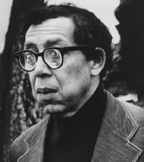
Robert Hayden (Jay Semple)
The Department of English at the University of Michigan has announced plans for a one-day conference on November 1, 2013 in honor of Robert Hayden, the distinguished poet and educator who received an M.A. degree from the University of Michigan in 1944 and returned to teach at the university in 1970 as Professor of English until his death in 1980.
Hayden has emerged as a major figure in American literary history. He is the leader, along with Gwendolyn Brooks, of the generation of African American poets that emerged in the 1940s to achieve widespread critical attention and a massive presence in anthologies and textbooks. He served as poetry consultant to the Library of Congress (the position now known as Poet Laureate of the United States) from 1976-1978. The U.S. Post Office issued a postage stamp in 2012 to honor his achievement.
The keynote address of the conference, to be held in the Rackham Amphitheater, will be delivered by Harryette Mullen, Professor of English and Creative Writing at UCLA, a Guggenheim Fellow (among other honors), and a finalist for the National Book Award and the National Book Critics Circle Award. Her volume of essays and interviews, The Cracks Between What We Are and What We Are Supposed to Be, appeared in 2012.
Professor Mullen will be introduced by A. Van Jordan of the U-M faculty. A panel discussion in early afternoon will include Mullen, Linda Gregerson (of the U-M faculty), Lawrence Joseph, a Detroit native and the preeminent Arab-American poet of our time, and Frederick Glaysher, editor of Hayden’s Collected Poems and Collected Prose. Robert Hayden is a character in Glaysher’s recently published epic poem, The Parliament of Poets. Laurence Goldstein, Professor of English and co-editor (with Robert Chrisman) of Robert Hayden: Essays on the Poetry (University of Michigan Press, 2001), will serve as panel moderator.
In late afternoon, MFA students will read from and speak about Hayden’s poems, along with other participants in the conference.
Timetable:
10 a.m. Keynote address by Harryette Mullen
12-1:30 p.m. Lunch at various restaurants around campus
1:30-3:00 p.m. Panel discussion
3:00-5:00 p.m. Readings and remarks by audience members
–
After presenting some reflections on Hayden and his poetry on the panel, during the late afternoon, I’ll be reading a passage from my epic poem, The Parliament of Poems, from the Persona’s flight to the moon, with his guide, the poet Robert Hayden. Hope you can make it. The day promises to be a worthy tribute to a life well lived for the art of poetry. Please help spread the word far and wide.
Frederick Glaysher
Syllables for Richard Wright
September
syllables for Richard Wright
You
heard firebird sing:
Warning.
The red sun still stands.
Soon,
a green sun blooms.
Jerry
W. Ward, Jr.
3
September 2013
Subscribe to:
Posts (Atom)