Wednesday, September 4, 2013

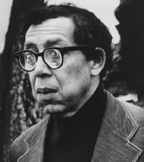
Note for Richard Wright's 105th Birthday


Note for Richard Wright’s 105th Birthday


                In 1942, the psychologist Fredrick Wertham sent Richard Wright two verses, one on January 15 and the other on May 27.  The haunting lines of the first


Where men have always looked around

And searched for secrets never found,

You saw a vision, dark, profound;

You heard beneath a distant sound;

You took the lid off the Underground.


are illuminated by the second verse entitled Underground


The Freudians talk about the Id

And bring it below

But Richard Wright took off the lid

And let us see the woe.


It is likely that the only works by Wright that Wertham might have read before 1942 were Uncle Tom’s Children, Native Son, and 12 Million Black Voices. His insights about Wright’s intellectual acumen are germane in discussions of Wright’s fiction and non-fiction.  Like William Blake, Wright was a visionary, one who exposed deep recesses of human consciousness.  One is not surprised that he discovered quite early that Freudian theory might conceal as much as it reveals.  Pulling off the lid and urging people to ponder material and mental damages was Wright’s forte.


                On September 4, 2013, I celebrate the presence and power of Richard Wright’s mind.


Jerry W. Ward, Jr.


Note for the note:  Wertham’s correspondence with Wright is contained in the Wright Papers, JWJ Mss 3, Box 108, Folder 1677 at the Beinecke Rare Book and Manuscript Library, Yale University.

Tuesday, September 3, 2013

Robert Hayden

msgbarbottom

25 Aug 13 ROBERT HAYDEN. A CENTENNIAL TRIBUTE.

Robert_Hayden_by_Jay_Semple
Robert Hayden (Jay Semple)
November 1, 2013 – ROBERT HAYDEN: A CENTENNIAL CONFERENCE AND POETRY TRIBUTE
The Department of English at the University of Michigan has announced plans for a one-day conference on November 1, 2013 in honor of Robert Hayden, the distinguished poet and educator who received an M.A. degree from the University of Michigan in 1944 and returned to teach at the university in 1970 as Professor of English until his death in 1980.
Hayden has emerged as a major figure in American literary history. He is the leader, along with Gwendolyn Brooks, of the generation of African American poets that emerged in the 1940s to achieve widespread critical attention and a massive presence in anthologies and textbooks. He served as poetry consultant to the Library of Congress (the position now known as Poet Laureate of the United States) from 1976-1978. The U.S. Post Office issued a postage stamp in 2012 to honor his achievement.
The keynote address of the conference, to be held in the Rackham Amphitheater, will be delivered by Harryette Mullen, Professor of English and Creative Writing at UCLA, a Guggenheim Fellow (among other honors), and a finalist for the National Book Award and the National Book Critics Circle Award. Her volume of essays and interviews, The Cracks Between What We Are and What We Are Supposed to Be, appeared in 2012.
Professor Mullen will be introduced by A. Van Jordan of the U-M faculty. A panel discussion in early afternoon will include Mullen, Linda Gregerson (of the U-M faculty), Lawrence Joseph, a Detroit native and the preeminent Arab-American poet of our time, and Frederick Glaysher, editor of Hayden’s Collected Poems and Collected Prose. Robert Hayden is a character in Glaysher’s recently published epic poem, The Parliament of Poets. Laurence Goldstein, Professor of English and co-editor (with Robert Chrisman) of Robert Hayden: Essays on the Poetry (University of Michigan Press, 2001), will serve as panel moderator.
In late afternoon, MFA students will read from and speak about Hayden’s poems, along with other participants in the conference.
Timetable:
10 a.m. Keynote address by Harryette Mullen
12-1:30 p.m. Lunch at various restaurants around campus
1:30-3:00 p.m. Panel discussion
3:00-5:00 p.m. Readings and remarks by audience members
–
After presenting some reflections on Hayden and his poetry on the panel, during the late afternoon, I’ll be reading a passage from my epic poem, The Parliament of Poems, from the Persona’s flight to the moon, with his guide, the poet Robert Hayden. Hope you can make it. The day promises to be a worthy tribute to a life well lived for the art of poetry. Please help spread the word far and wide.
Frederick Glaysher

Syllables for Richard Wright


September syllables for Richard Wright


You heard firebird sing:

Warning. The red sun still stands.

Soon, a green sun blooms.


Jerry W. Ward, Jr.

3 September 2013

Sunday, September 1, 2013

American Icons: NATIVE SON

This Studio 360 radio documentary is first-rate.  It forces us to confront Richard Wright's courage and honest and the gross dishonesty that prevails in the United States of America.

Saturday, August 31, 2013

Alice Walker


Alice Walker, Autobiographical Contract, and Sciences of Memory


Definition is essential.  What does womanist mean and what is its relation to feminist?  Does the assertion that womanist is to feminist as purple is to lavender explain saturation as a major difference in historical experience?  The various essays, bits of interviews, poetry (inside prose frames) and reviews collected in Alice Walker’ In Search of Our Mother’s Gardens (1983) suggest an answer. They suggest that Walker the novelist is of a “revolutionary” mind like a furious flower, is as serious as was Zora Neale Hurston, Audre Lorde, and Toni Cade Bambara. These women assumed the freedom to create is an entitlement of nature not of man. And they have the backing of words attributed to Sojourner Truth in 1851: “Whar did your Christ come from?  From God and a woman! Man had nothin’ to do wid Him.”

Walker’s attitude toward literature has a faint echo of Langston Hughes’s “The Negro Artist and the Racial Mountain.”  Do not confuse attitude with heritage. Mountains are gendered property, and in Walker’s case, Sojourner Truth holds the mortgage! Interpretation can take the guise of paying interest, escrow, and principle.

Walker’s trope of the garden has a great deal to do with memory and with the fact that canonized writers have no monopoly in cultivating ART. Context requires remembering that Walker first broadcast ideas about mothers and gardens at the 1973 Phillis Wheatley Festival in Jackson, Mississippi and remembering I had taught The Third Life of Grange Copeland the previous year.  My memory of that event and of my teaching has been reactivated by how the biologist Steven Rose commented on the Rosetta Stone in The Making of Memory (1992):

Memory pervades ancient ballads and modern novels alike.  Especially in the present century, from James Joyce and Marcel Proust to the new writing of Margaret Atwood, of J. G. Ballard, Toni Morrison, Salman Rushdie and Alice Walker, the theme of personal memory, of the constant examination, interpretation, and reinterpretation of lived experience, is central.

And Rose asked in the same paragraph:  Or are we doomed to live always in the divided worlds of subjectivity and objectivity, with no translation possible between these languages? (7)


Mother transmits the seed of art and the desire to grow it into ART to daughter.  We are expected to read the fine print in the title essay “In Search of Our Mother’s Gardens” as Walker’s autobiographical contract.

Walker’s recent thinking about her autobiographical contract appears in the appended reader’s guide for Now Is the Time to Open Your Heart (2004).  Asked what inspired her to write the novel, Walker replied:  “So in Now Is the Time to Open Your Heart I set out to chart such a journey, the adventures of Kate Nelson Talkingtree, who is named partly for a grandmother, my father’s mother, who was murdered when he was a boy.”  This novel incorporates Walker’s quest for the culture of the Grandmother, her keeping the faith with the autobiographical contract.  Through fiction, Walker provisionally confirms Steven Rose’s idea that sciences of the collective -- “ecology and ethnology, sociology and economics” (7-8) --   are better instruments than the sciences of “individual psychology or neuroscience” (7) for exploring the nature of memory. The jury is still out, however, on any permanent conjoining of subjectivity and objectivity, inside or outside of fictions.


     Jerry W. Ward, Jr.    August 31, 2013

Thursday, August 29, 2013

February 26, 2011


Acceptance statement for the Richard Wright Literary Excellence Award

Natchez Literary and Cinema Celebration

February 26, 2011


BETWEEN RICHARD WRIGHT AND ME


                We both spent our childhood and youth in Mississippi in the twentieth century.  Like many American males we were sensitive to how we were socialized by the values and expectations of our families.  We were fully aware that law and custom set boundaries for our growth, and we discovered fairly early the peculiar feeling of accomplishment that came from defying limits.  We were curious rebels, and the price we had to pay for our lack of meekness shaped and left indelible marks on our personalities.

                Our curiosity about the things of this world was notably increased by our uses of literacy.  We were avid readers, allowing our imaginations to be much enlarged by words, language, and the lore one can acquire from books and from oral transmission.  We were different from our peers.  We were existential before either of us could pronounce or define that word.  Our differentness was at once a blessing and a curse, a paradox within the matrix of Deep South society. We were blessed with inner strength and will power, with knowing we had the option of refusing to become who and what the less than generous world desired we should become.  Even if our bodies gave scant evidence of disobedience, our minds delighted in transgressive explorations; we entertained ideas that neither our immediate families nor our environments were prepared to understand or condone.  As we grew into adolescence, our observations and reading prepared us to become exceptionally critical of injustice.  And we discovered that the forms of language that so fascinated us could be instruments for effecting change.  Literature and our experiences taught us that we did not have to be passive.  We had agency; it was our entitlement under natural law to deny the possibility of our being wretched and tragic victims.

                Obviously, I have sketched a few parallels between the life experiences that Richard Wright described vividly in his classic autobiography Black Boy and my memories of the trajectory of my own life.  The epiphany I had upon reading Black Boy in my youth created a most powerful affinity between Richard Wright and me.  It also created the recognition that we shared, despite the thirty-five years that separated us, similar values and tough-minded perspectives about the dynamics of good and evil that impact the lives of human beings.  Although our paths in adulthood took quite different directions ---Wright used his talents to establish himself as a writer of international importance, and I used my talents to forge a career in American higher education, we both dedicated our lives to trying in good faith to speak truth about our world, to find receptive ears for our words, and to shake people out of the dangerous habits of inattention and complacency.  Richard Wright has indeed taught me through the full range of his writings about my obligations to humanity.

                Thus, it is with profound humility that I accept the Richard Wright Literary Excellence Award and express my gratitude to the Natchez Literary and Cinema Celebration for deciding that I am worthy of such a distinguished honor.  Of course, that gratitude includes thanks to Carolyn Vance Smith for founding NLCC and to members of Wright’s family who have embraced me with kindness.  The honor entails an obligation to think and write in ways that pay tribute to the model of excellence that Richard Wright set for all of us and to continue my commitment to ensuring that future generations of writers and thinkers never forget how essentially valuable is Richard Wright’s legacy to the world.

Jerry W. Ward, Jr.